Culture & Heritage of Jerada
A city shaped by coal, the sweat of miners and the richness of Amazigh and Arab cultures.
The mining heritage
In the early 20th century, the discovery of anthracite raised Jerada from the Oriental desert. Around the shaft, a working-class town grew — cosmopolitan and united.
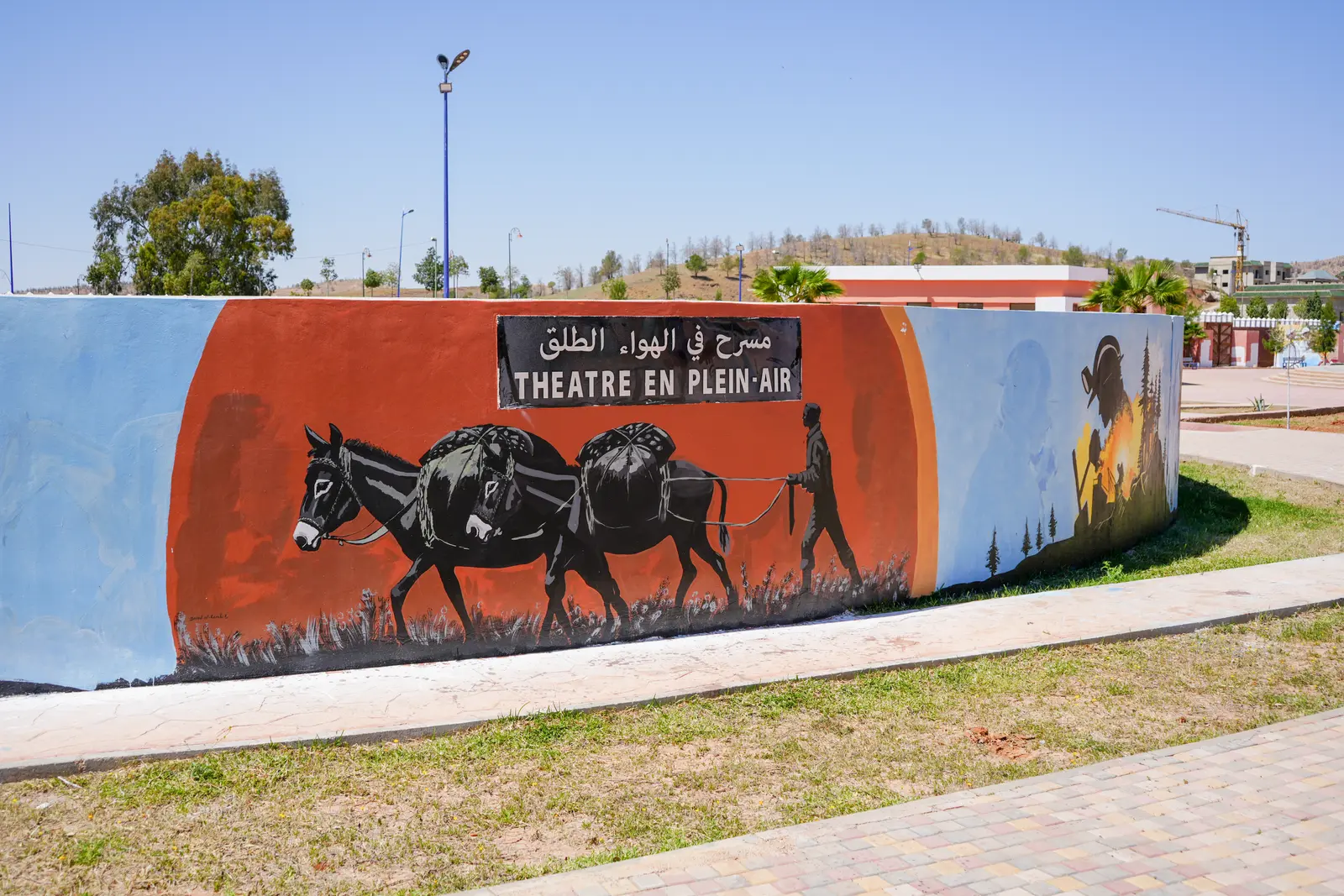
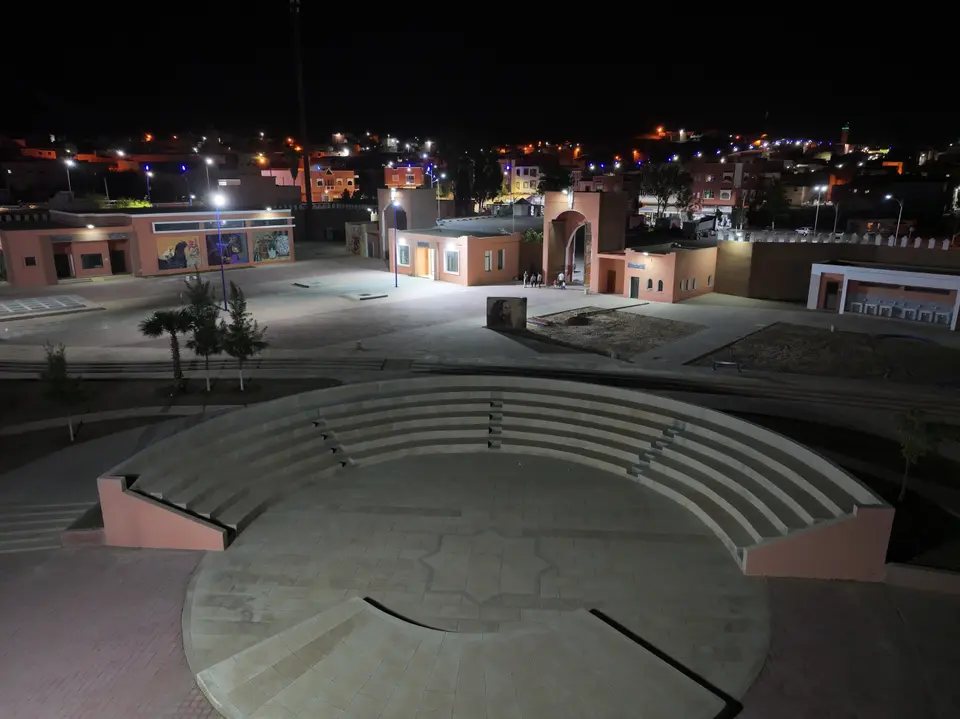
For decades the mine set the rhythm of life: descents underground, headframes, slag heaps drawing the horizon. The mine's closure left a scar — but also a proud memory, honoured today by the park and its murals.
Amazigh & Arab cultures of the Oriental
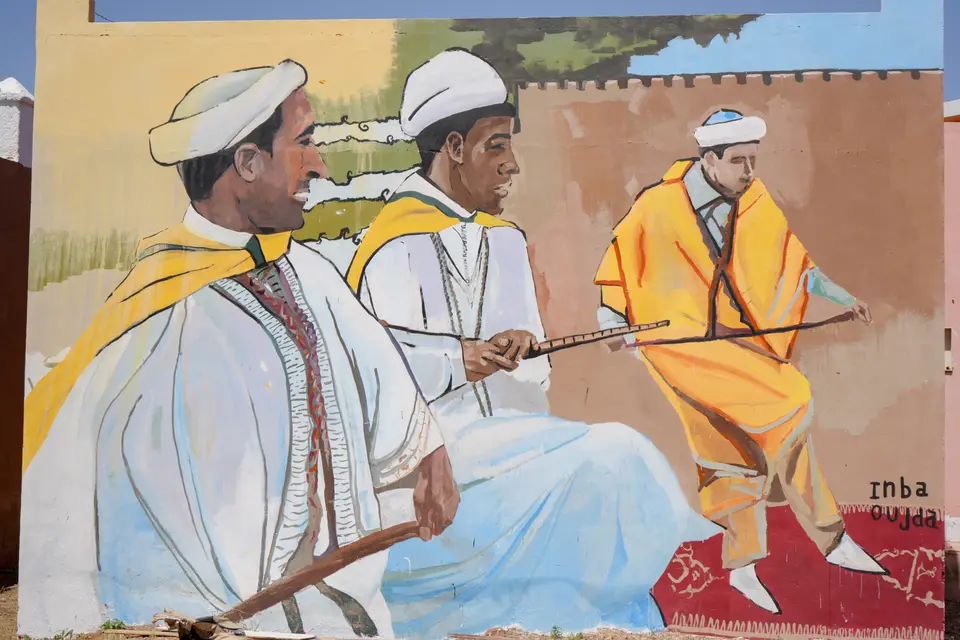
Jerada belongs to the cultural melting pot of the Oriental, where Amazigh and Arab traditions blend in language, music, crafts and hospitality.
The park lets these legacies speak to one another: caravan murals, traditional dress, patterns and colours of the land.
Historical milestones
Indicative dates — pending validation by the Prefecture.
- 1920s
Coal discovery
Anthracite is discovered in the region; the first mining works begin.
- 1927
Birth of the mining town
The working town of Jerada develops around the mine.
- 1930–60
The age of the mine
Jerada becomes a major mining hub of eastern Morocco.
- 1998
Closure of the mine
The end of operations opens a page of reconversion for the town.
- 2000s
Urban revival
Development projects, green spaces and public facilities.
- Today
The park: a place of memory and life
The Recreational Forum celebrates Jerada's identity and turns the town toward the future.